Cacho’s Wink
Analía was born for the ring, even though she started boxing later in life—already a mother to her beautiful daughter, Belén. She laced up her gloves at a gym in the Buenos Aires neighborhood of Villa Urquiza called “El Galpón” (The Warehouse), a place where the air smelled of liniment and unyielding dreams.
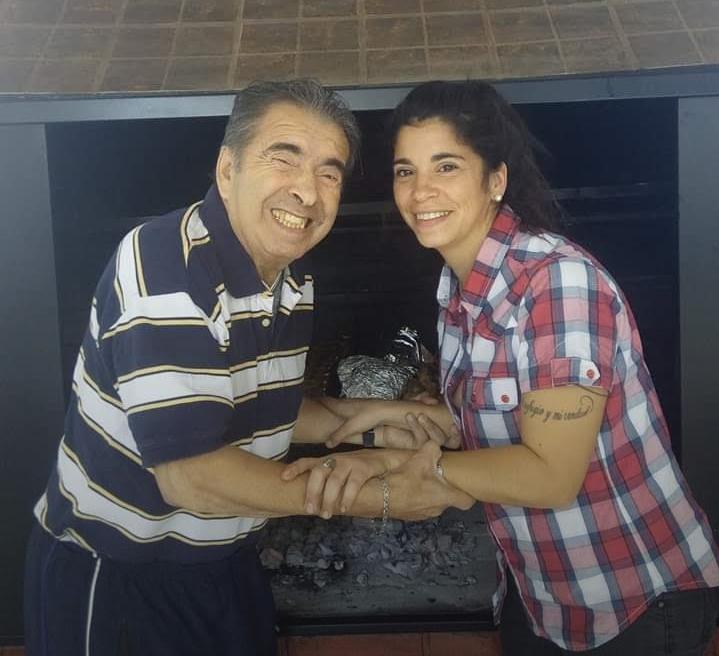
Cacho, her father, was a hard-working man with calloused hands and a heart of gold. The backbone of a middle-class family bound together like ivy to a wall, he was always in her corner—the corner of her heart, far beyond the ropes.
A die-hard Boca Juniors soccer fan and a tireless worker, Cacho taught Ana more than just how to throw a right cross; he taught her how to get back up after every blow life dealt. “You’re my whirlwind, Ana,” he would tell her, his eyes shining with pride.
By age 26, Analía had built a solid amateur career with six wins, one draw, and zero losses. But during a routine sparring session, a bad twist tore her shoulder apart.
The doctors were blunt: “The ring is over for you.” She hung up her gloves with a broken soul, but Cacho refused to let her fall. “Boxing isn’t just about punching, my little girl. You are bigger than that,” he told her one night while sharing mate in the backyard.
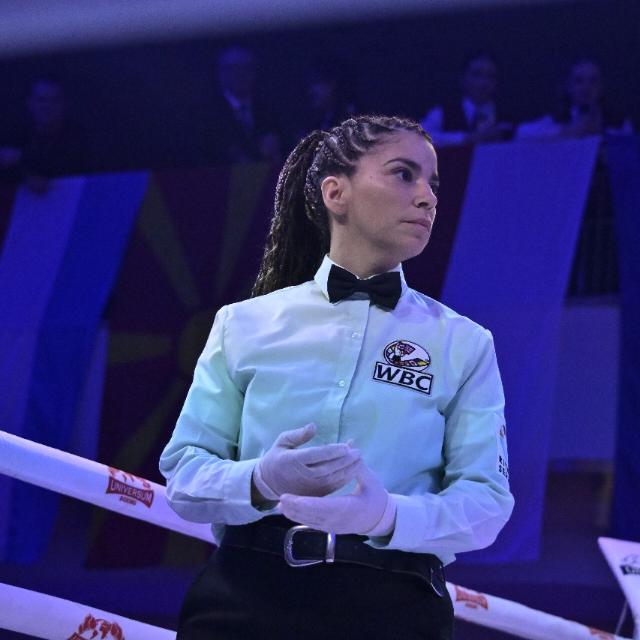
Analía reinvented herself. She enrolled in the coaching course at the Argentine Boxing Federation. During classes, Oscar Seleme, a veteran official, saw something in her: a fierce calmness, a gaze that could read a fighter’s soul. “You’ve got the makings of a referee, girl,” he told her. Analía hesitated, but she took the refereeing courses and passed with flying colors.
Now, “Cachito’s whirlwind” was both a coach and a referee. She had to choose between giving instructions from the corner or enforcing justice inside the squared circle. The refereeing called her louder. There was something about standing at the center of the canvas, acting as the ultimate authority, that made her feel alive.
The following years were spent on dusty roads. Analía traveled to neighborhood clubs, damp gyms, and youth tournaments in distant provinces like Formosa, Salta, and Córdoba.
She refereed fights for dreaming young girls, anxious boys, and veterans who refused to throw in the towel. Every trip was a step toward her ultimate goal: the professional ranks, the legendary Luna Park stadium, the dream she shared with Cacho.
From home, he followed her journeys however he could, begging her to recount every detail. “One day you’re going to be at the Luna Park, my little girl, and I’ll be cheering louder than anyone,” he promised.
But life hits hard. At 72, Cacho suffered a stroke. He survived, but the aftermath left him fragile, with a trembling voice and a slowed body. Even so, he never stopped being Analía’s corner man.
From his armchair, wearing his faded Boca jersey, he cheered her on more with his tender eyes than with his voice: “Don’t you stop, my whirlwind. This is just another round.” While Analía cared for him, she refereed with even more fire, as if every fight were a tribute to her father.
In August 2021, the news finally came: Analía would make her professional debut at a boxing card in Pilar, a little town near to Buenos Aires. It would be her first paid fight, the threshold of her dream. She rushed to tell her father. He was having a rough day, but he still congratulated her with a half-smile and a gaze bursting with pride and love.
Then fate, cruel as ever, delivered a low blow. The night before her debut, Cacho’s light went out at age 80 after a long battle. Ana felt her world collapse. She wept for the loss of the man who had given her everything—for his laughter, his advice, and the heartbreaking realization that he wouldn’t see her at Luna Park as he had dreamed.
The grief was too heavy. She couldn’t step into the ring in Pilar. The Federation, showing great humanity, rescheduled her debut for eight days later in La Plata city, officiating a fight between rookies just like her.
That night in the provincial capital, Analía was trembling. The nerves of her debut mixed with the crushing emptiness left by Cacho. Yet, she knew he would be with her, somehow.
The bell rang. The bout was evenly matched, the young fighters were throwing with passion, and the national TV broadcast was running smoothly. Suddenly, in the second round, something unprecedented happened: the stadium went completely pitch black. A blackout was unheard of for a televised event, where backup generators are supposed to
prevent such mishaps. But it happened. Silence fell like a heavy curtain. In the dim shadows, Analía felt a chill run down her spine. It was him. It was Cacho, sending her his wink.
“Keep moving forward, my little girl, you’re going to be the best,” he seemed to whisper.
When the lights flashed back on, Analía smiled through her tears and controlled the ring with an authority no one would ever forget.
Years passed, and Analía became a standard-bearer for boxing officials. She finally refereed at Luna Park, just as Cachito had envisioned. Her composure, her movement across the canvas, and her fairness carried her far.
In 2024, the World Boxing Council named her the Referee of the Year. To receive the award, she was invited to Las Vegas—a world worlds apart from the outskirts of Buenos Aires, the rural towns, and the dirt roads of her past.
Amid the glitz of Sin City, beneath the colossal lights of a massive stage, Analía felt Cacho closer than ever. Every decision she made, every fight she commanded, carried his love and strength.
In the ring of life, Analía didn’t just fulfill her dream. She fulfilled Cacho’s. And with every wink from destiny, she knew he was right there, just like always, shouting: “You’re my whirlwind, little girl!”
Author’s Note: This story is a tribute to my beloved wife, Analía Maradona, and her father, Héctor Hipólito “Cacho” Maradona. Any resemblance to reality is strictly intentional.